

Optic Equity Access
Optic Equity Access seeks to generate immediate funds from a large, single stock position through a pre-paid stock transaction (loan) coupled with a risk-minimizing equity collar strategy.
Objective
Optic Equity Access seeks to generate immediate funds from a large, single stock position through a pre-paid stock transaction (loan) coupled with a risk-minimizing equity collar strategy.
Keep Your Stock
- Maintain ownership.
- Seek to participate in much of the stock’s upside over time.
- Preserve long-term capital gains status.
- Keep flexibility to trim or donate shares later.
Protect Your Downside
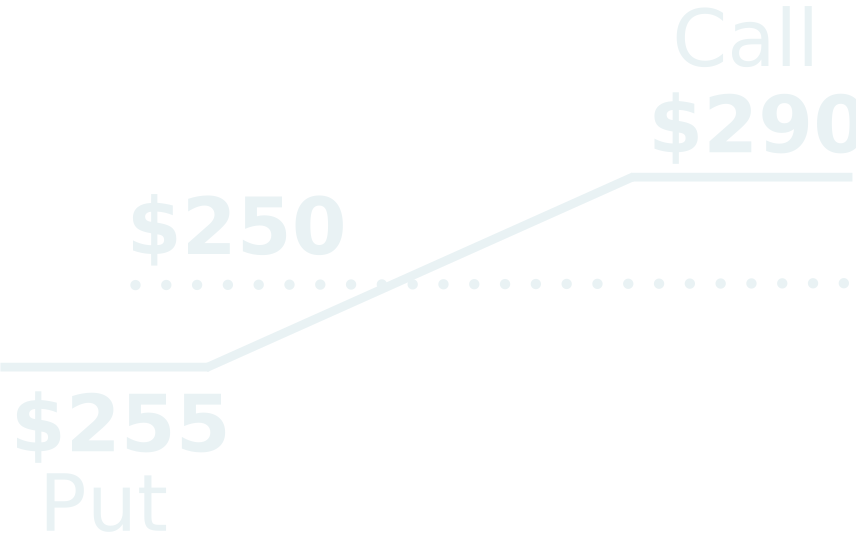
- Implement an actively-managed options “collar.”
- A put option, financed by a call option, seeks to limit large losses.
- The defined risk ranges make volatility more predictable.
- Adjust the collar as needed, since call options cap upside.
Diversify Your Portfolio
- Unlock up to 90% of your stock’s value using Portfolio Margin.
- Use those borrowed proceeds to build a diversified portfolio alongside your core holding.
- Allocate to equities, alternatives, and fixed income based on your goals.
- Seek to reduce reliance on one company or sector over time.
Harvest Tax Efficiencies
- Use a professionally-managed long/short tax-loss harvesting (“TLH”) strategy.
- Systematically realize losses while staying invested.
- Build a pool of realized losses that can offset future capital gains.
- Use harvested losses to sell shares more tax-efficiently over time.
Large Single Stock Position*

1
Concentrated Stock

2
Protective Collar
3
Portfolio Margin

4
Diversification plus Tax-Loss Harvesting

Continue to roll and delay any sale of shared over time
*Minimum value: $1 million
FAQ
What is Optic Equity Access?
An actively managed strategy around your concentrated stock that uses options, portfolio margin, and a professional tax-loss harvesting sleeve to help you keep your shares, manage downside, diversify, and improve after-tax outcomes over time.
What are realized losses?
The losses are real for tax purposes, generated by selling positions at a loss and buying similar (but not identical) replacements. The manager seeks to offset those losses with gains elsewhere with the goal that pre-tax performance is broadly comparable to the market over time.
Do I have to sell my stock?
No. A key objective is that you remain an owner of your stock while we build protection, diversification, and tax tools around it. You can still choose to sell shares later if that fits your goals.
How does the protection work?
We use a collar—buying a put for downside protection and selling a call to help finance the cost of the put. This can soften large losses in a downturn but may also limit upside in strong rallies.
How do I diversify my position?
We borrow against your stock using portfolio margin and use the proceeds to fund a diversified portfolio (including the TLH sleeve).
What is tax-loss harvesting?
The TLH manager runs a long/short portfolio that seeks to stay invested in the market while potentially realizing capital losses by selling positions that have declined in value as the rest of the portfolio has increased.
What returns are expected?
The goal is not to “beat the market” every year, but to combine:
- Concentrated-stock ownership,
- Smoother downside experience,
- More diversified sources of return, and
- Better after-tax outcomes over a full cycle.
Results can be higher or lower than traditional approaches, and you can lose money.
Who is this designed for?
Generally, taxable investors with a meaningful concentrated position, a multi-year time horizon, and comfort with options and margin. It is usually not designed for IRAs or short-term investors.
What are the main risks?
Market risk (stocks and funds can decline), options risk (collars can underperform in strong up markets), margin/borrowing risk (losses and interest costs can be magnified), and tax/strategy risk (after-tax benefits and tracking may differ from expectations). See full disclosures for more detail.
Important Disclosures
Options Trading Risks
Optic Asset Management, a division of Watts Gwilliam & Company, LLC, is a registered investment advisor. Options involve risk and may not be suitable for all investors. Loss of principal may occur. Before trading options, you will receive the Characteristics and Risks of Standardized Options document, which can be found at www.theocc.com. You must be approved for options trading by the custodian before implementing an options strategy with Watts Gwilliam or Optic Asset Management.
Transaction Costs and Fees
Options trading involves significant costs and fees which will impact the overall performance of the strategy. It is important to understand these expenses and consider them when evaluating the potential return on an options strategy.
Potential for Underperformance
Some Optic strategies seek to provide income through the receipt of option premiums, while attempting to provide you with appreciation in your underlying stock or index. While the goal of those strategies is to participate in as much upside as possible, the performance can’t be guaranteed. Portfolios may underperform in various market conditions.
Collar Strategy
Optic Equity Access utilizes a collar, which includes a long put option and a short call option, to help secure a portfolio margin loan against a long stock position. The use of the collar may limit profit potential if the security’s price rises above the call’s strike price and may provide limited downside protection only up to the put’s strike price.
Dual Investment Risks
Reinvesting Optic Equity Access loan proceeds into other securities creates risks, including increased portfolio leverage and exposure to market volatility, which could amplify losses. Both the concentrated stock position used as collateral and the reinvested proceeds may lose value at the same time. The new investments may lack liquidity and may impact the ability to repay the loan. Reinvesting in assets similar to the original concentrated stock may not yield the intended diversification.
Loan-Related Risks
In Optic Equity Access, the cash received is a loan backed by your securities, with variable interest rates and repayment terms. Interest and fees will affect the Strategy’s net performance. You must repay the loan at collar maturity, using either securities or cash. The long stock position serves as collateral, and failure to meet the loan terms could result in a margin call or loss of collateral. Accounts using Portfolio Margin must maintain over $100,000 in equity. If Portfolio Margin is terminated, you’ll face higher Reg T margin requirements. Read the custodian’s loan disclosures carefully.
Fee Consideration –Conflict of Interest
In Optic Equity Access, you are charged the same management fee on both the long value of the stock position (adjusted for the net value of the collar) without any offset for the loan, and on any loan proceeds that are reinvested and managed by us. The loan frees up liquidity that, when we invest it on your behalf, results in more assets under management. We therefore have a conflict of interest in recommending this strategy. For more information on our fees, please see our company brochure (Form ADV Part2A).
Tax Risks
Neither Watts Gwilliam & Company, LLC, nor its Optic Asset Management division, provides tax advice. You should consult with a tax advisor before participating in Optic Equity Access transactions, including any rollover transactions.
The IRS’s ‘constructive sale’ rules under Section 1259 of the Internal Revenue Code are complex and ambiguous, lacking clear Safe Harbor guidelines. If the IRS determines that an initial or subsequent Optic Equity Access transaction constitutes a constructive sale, you may be required to recognize any previously unrealized gains on the underlying asset immediately, rather than at its maturity.
Neither Watts Gwilliam & Company, LLC, nor its Optic Asset Management division, will be liable for any IRS decisions requiring you to recognize unrealized gains or for any related taxes, penalties, fines, or fees you may owe.
Prepaid Variable Forward Contracts
The Optic Equity Access strategy is not a prepaid variable forward (PVF) contract.